TROLLEYMEN
A cream and red PCC car crossing the Smithfield Street Bridge, downtown Pittsburgh's skyline reflected in the river

Trolleymen

Drive Pittsburgh's streetcars as they ran.

Take a PCC car through the Mt. Washington tunnel, over the Smithfield Street Bridge and out Broadway to Beechview in the 1970s. Then come back in 1993 and run the new light rail under downtown.

The game is in beta. Beta drivers have a password; to get on the list, email adam@adamsullivanconsulting.com.

Runs in the browser on a computer, a tablet or a Meta Quest headset. For museums and historical societies: an exhibit cab.

In the game: 1711 on the Smithfield Street Bridge

You are the operator

Trolleymen is a streetcar simulator of Pittsburgh's South Hills lines, built street by street from maps, aerial photographs, timetables and memory.

Close the doors, notch up the controller, gong the car at the corner, sand the rail on the hill and stop with the front door at the car-stop sign. Riders wave you down, pay as they board or as they leave, and the timetable keeps count.

Start a career on the extra board in June 1978, with two days beside an instructor, then work shifts from a paddle, pick runs in seniority order and earn your way to the good ones. Or take free play, choose a line and a stop, and go. Everything runs in a web page; on a Meta Quest you sit in the cab.

Two eras on the same rails

The South Hills network twice: at the height of the PCC in the seventies, and in 1993, the year the light rail took over and the Overbrook line ran its last PCCs.

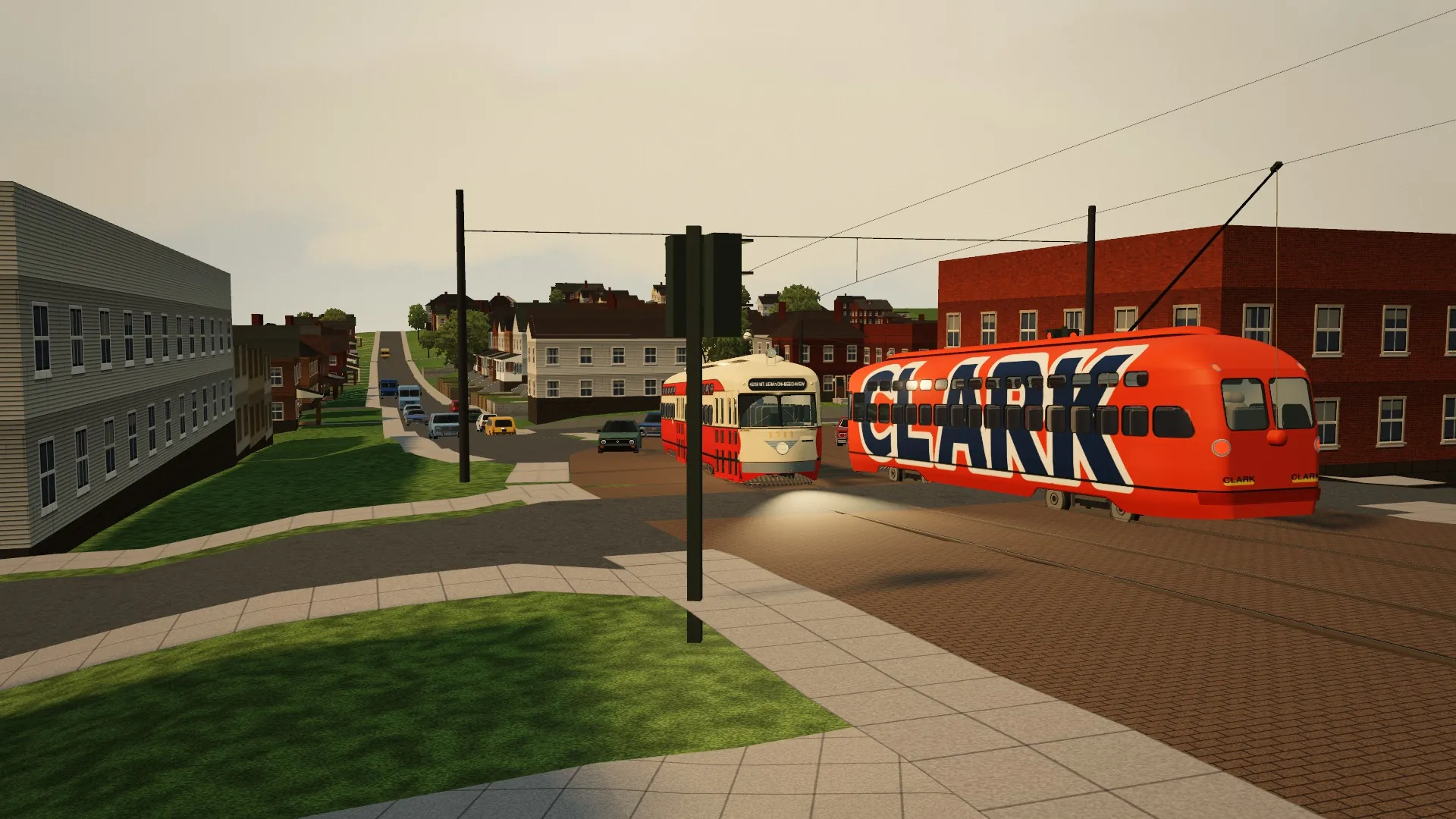
Two PCC cars meeting on Broadway in Beechview, one in Clark Bar orange and blue, one in cream and red, with brick houses and parked cars

The 1970s

Port Authority Transit PCC cars

From downtown the cars cross the Smithfield Street Bridge and climb through the Mt. Washington Transit Tunnel to South Hills Junction, where the lines split. The 42 goes up to Beechview and down the middle of Broadway to Mt. Lebanon; the 37, 35 and 36 take the Overbrook line's private right of way to Castle Shannon, Library and Drake. The 49 turns off at Carson Street and climbs Arlington Avenue over the hill. Downtown the cars work the loops of the early seventies, past Kaufmann's clock and up Grant Street.

Landmarks
The tunnel portals, the Smithfield Street Bridge, the P&LE station, South Hills Junction, the Palm Garden trestle, the Castle Shannon loop
Named runs
The morning rush, snow on the hill, the Firemen's Fair, Light Up Night, City of Champions parade day, the last car to Drake
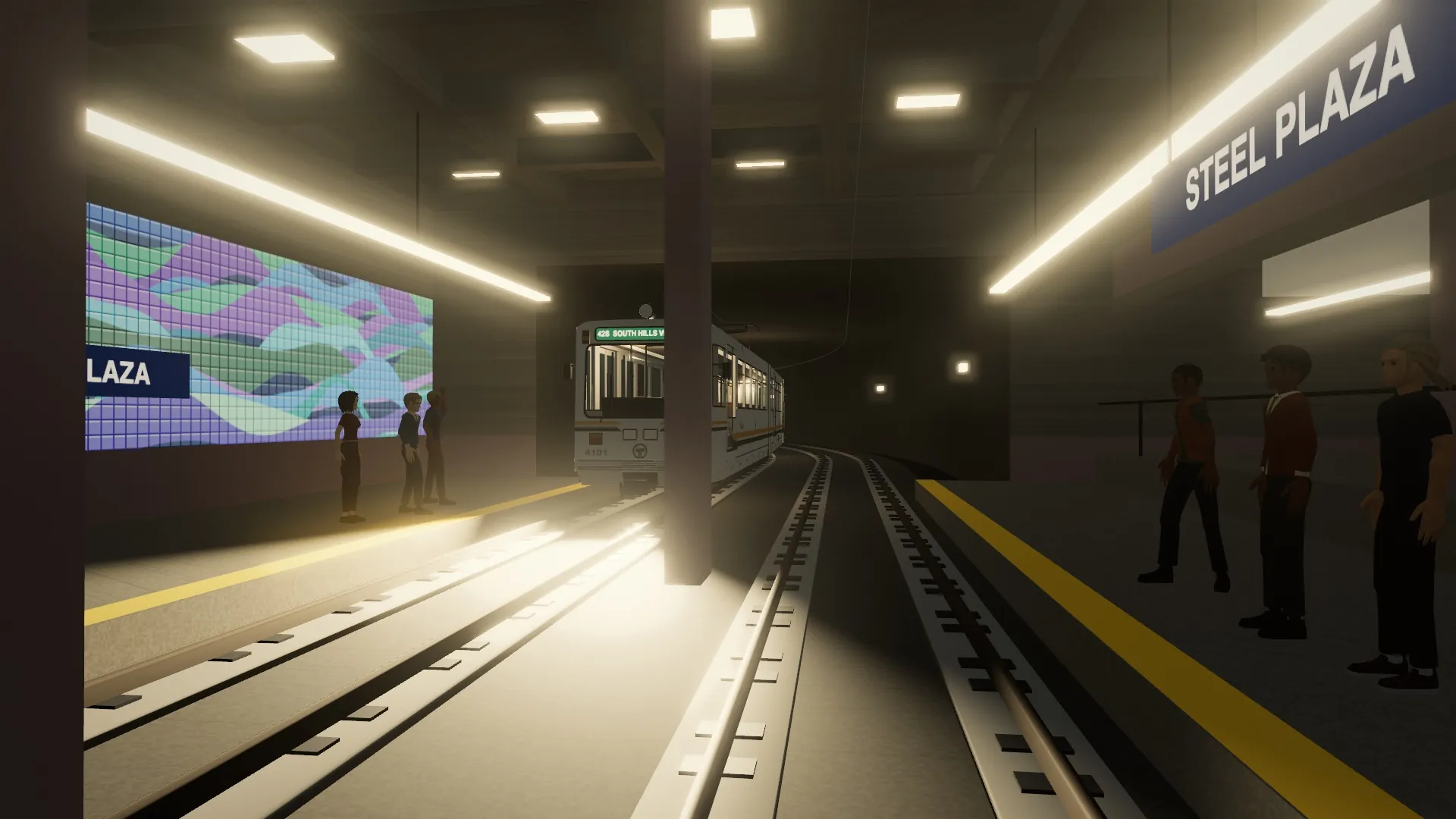
A Siemens SD-400 light rail car arriving at Steel Plaza station under downtown, riders waiting on the platform

1993

The new T and the last PCCs

Stage I light rail is open. The Siemens-Duewag SD-400s run the 42S to South Hills Village and the 42L to Library, over the Panhandle Bridge and into the subway at Steel Plaza, Wood Street and the loop at Gateway Center. The white 4000-series PCCs still work the 47S and 47D down the old Overbrook line, single track and wooden trestles, in its last year.

Stations
Gateway Center, Wood Street, Steel Plaza, Station Square, South Hills Junction rebuilt, South Hills Village and the rail center
In the cab
The route selector: the car is programmed for its route and the points set themselves ahead of it

Other cities, in preview

The same engine builds other streetcar cities from open map data. Three are under way and show on the game's home screen as previews while they are finished.

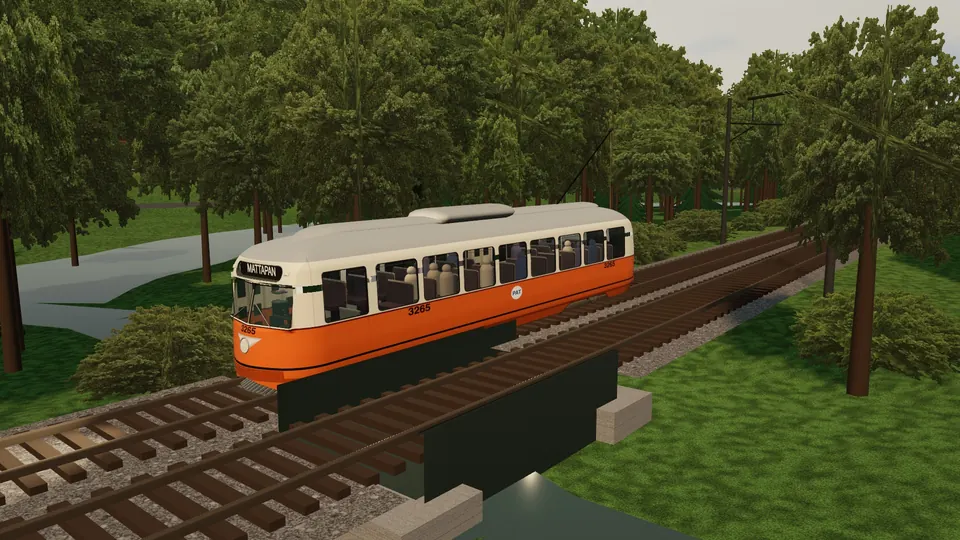
An orange and cream MBTA PCC car crossing a small bridge among trees on the Mattapan line
Boston: MattapanThe Mattapan line today, where PCC cars still run in daily service.
Preview
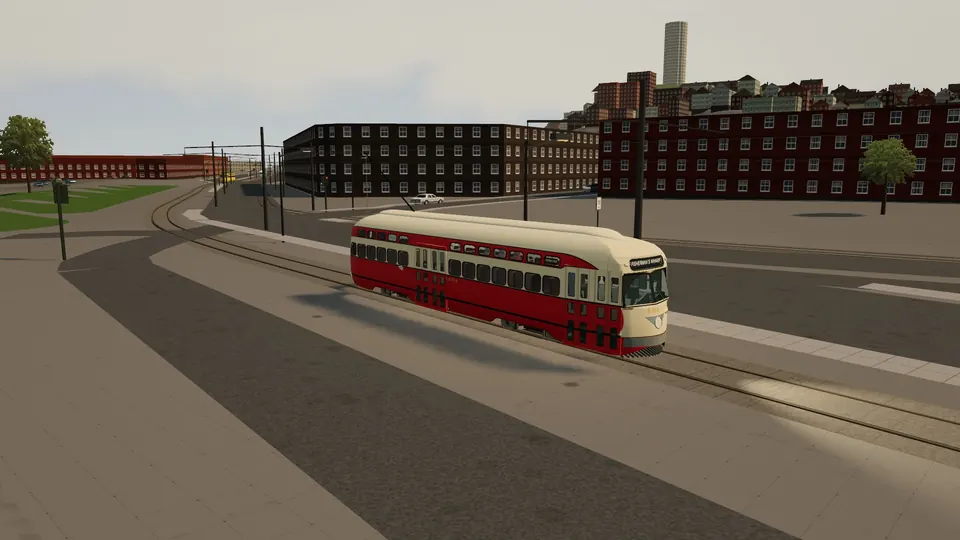
A PCC car in Pittsburgh Railways cream and red running along the San Francisco waterfront
San Francisco: the F lineMarket Street and the Embarcadero today, with 1062 in Pittsburgh Railways colors.
Preview
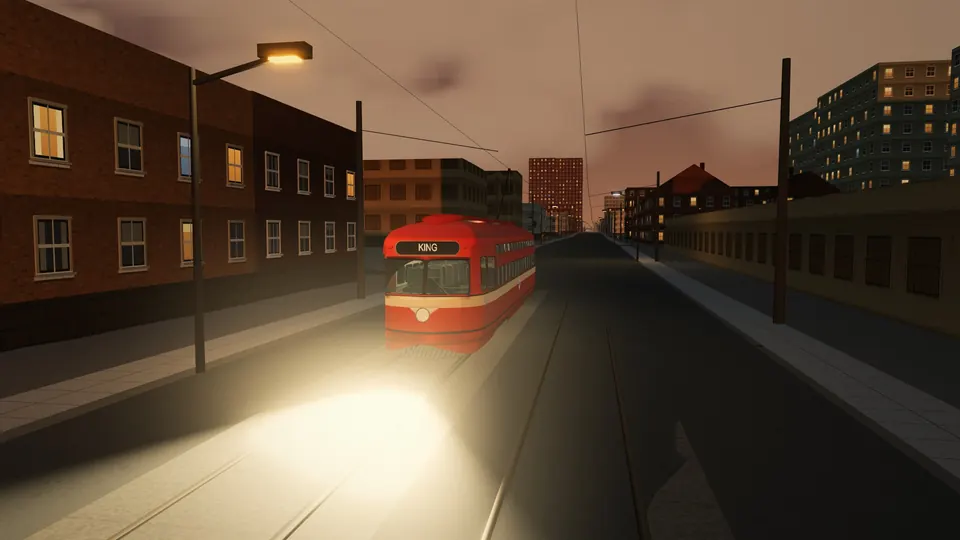
A red Toronto PCC car with its headlight on, coming down King Street at dusk
Toronto: the King carKing Street in 1975, from Broadview to Dundas West.
Preview

Highlights

Filmed in the game itself, frame by frame, with no sound. Each one is under ten seconds.

From the cab on Broadway1970s Down the brick street in Beechview, parked cars at the curb.
The Smithfield Street Bridge1970s Through the portal and over the Mon toward downtown.
South Hills Junction1970s Out of the tunnel and through the special work.
Dusk in Beechview1970s The street lamps come on and the windows light up.
Light Up Night1970s Snow on Smithfield Street and the Christmas windows.
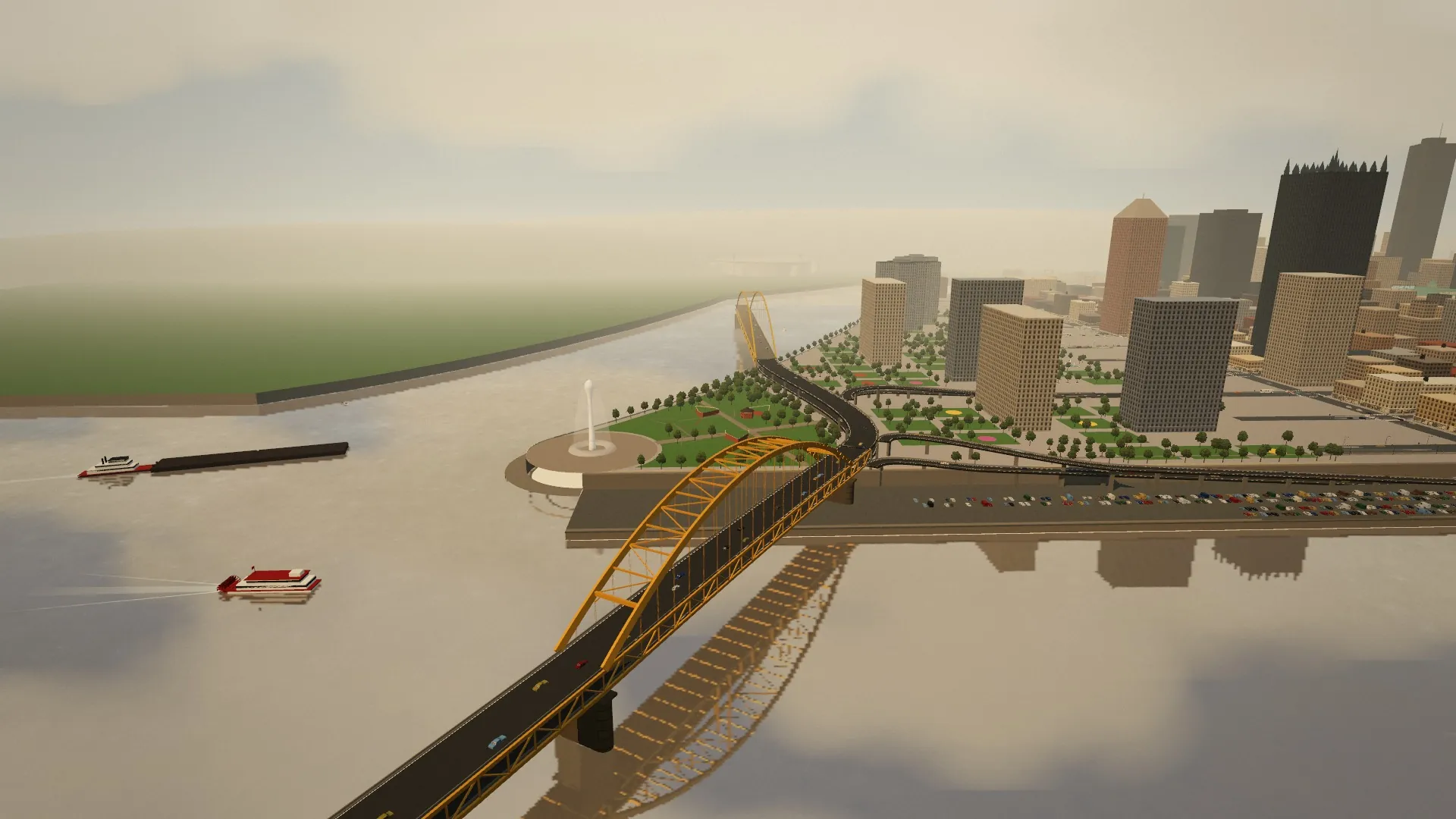
The Point1970s The fountain, the Fort Pitt Bridge and the three rivers.
Into Wood Street1993 An SD-400 pulls in under downtown.
The Panhandle Bridge1993 Across the Mon on the old railroad bridge.
Three more citiesPreviews Mattapan, the F line and the King car.

Along the line

Screenshots from both eras. Select one to see it full size.

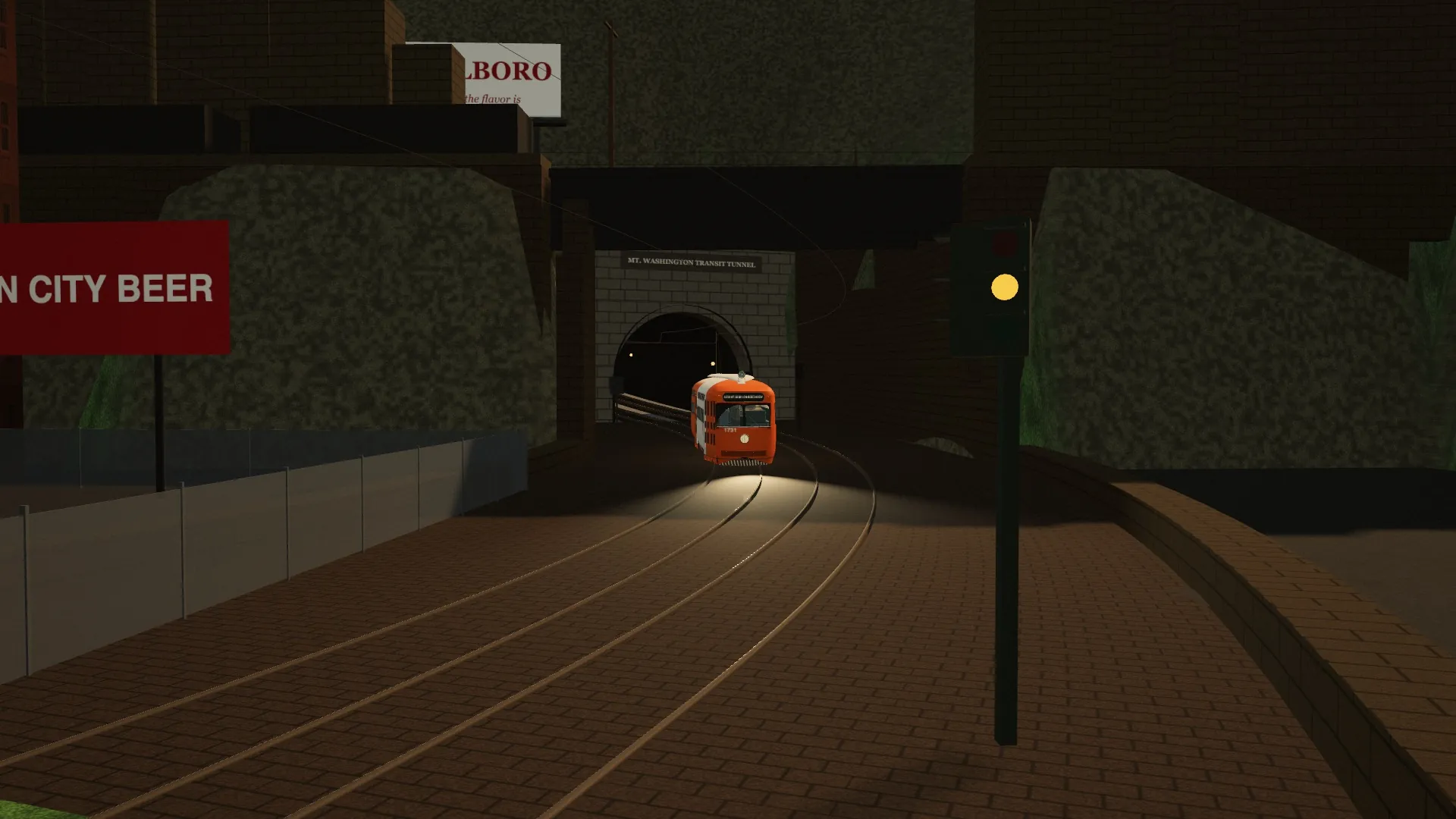
An orange and white PCC coming out of the Mt. Washington Transit Tunnel's north portal onto Carson Street
The Mt. Washington tunnel at Carson Street, 1970s
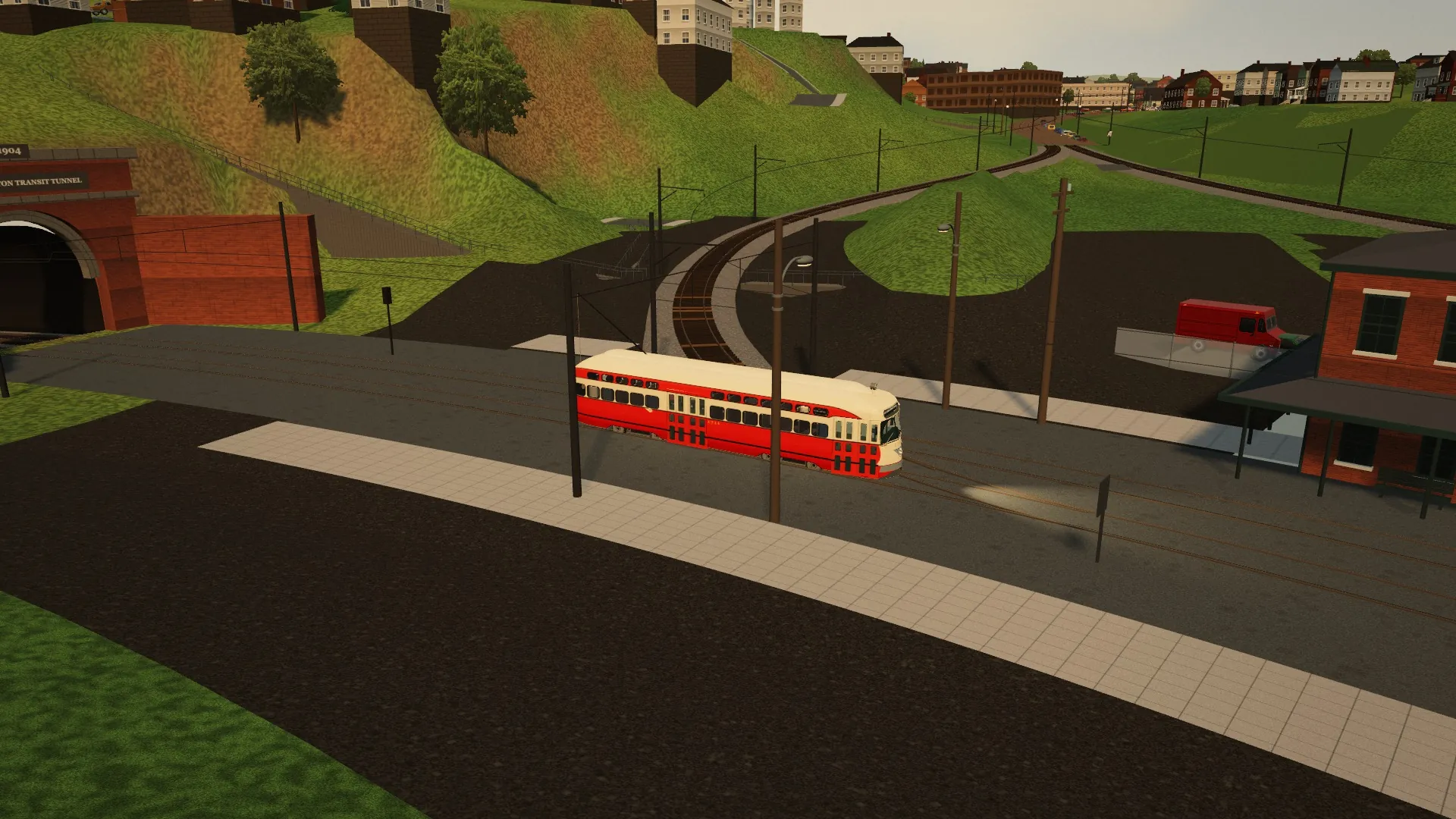
A cream and red PCC at South Hills Junction beside the tunnel portal and the station building
South Hills Junction, 1970s
The Point from Mt. Washington: the fountain, Point State Park, the golden Fort Pitt Bridge and downtown
The Point and the Fort Pitt Bridge from Mt. Washington
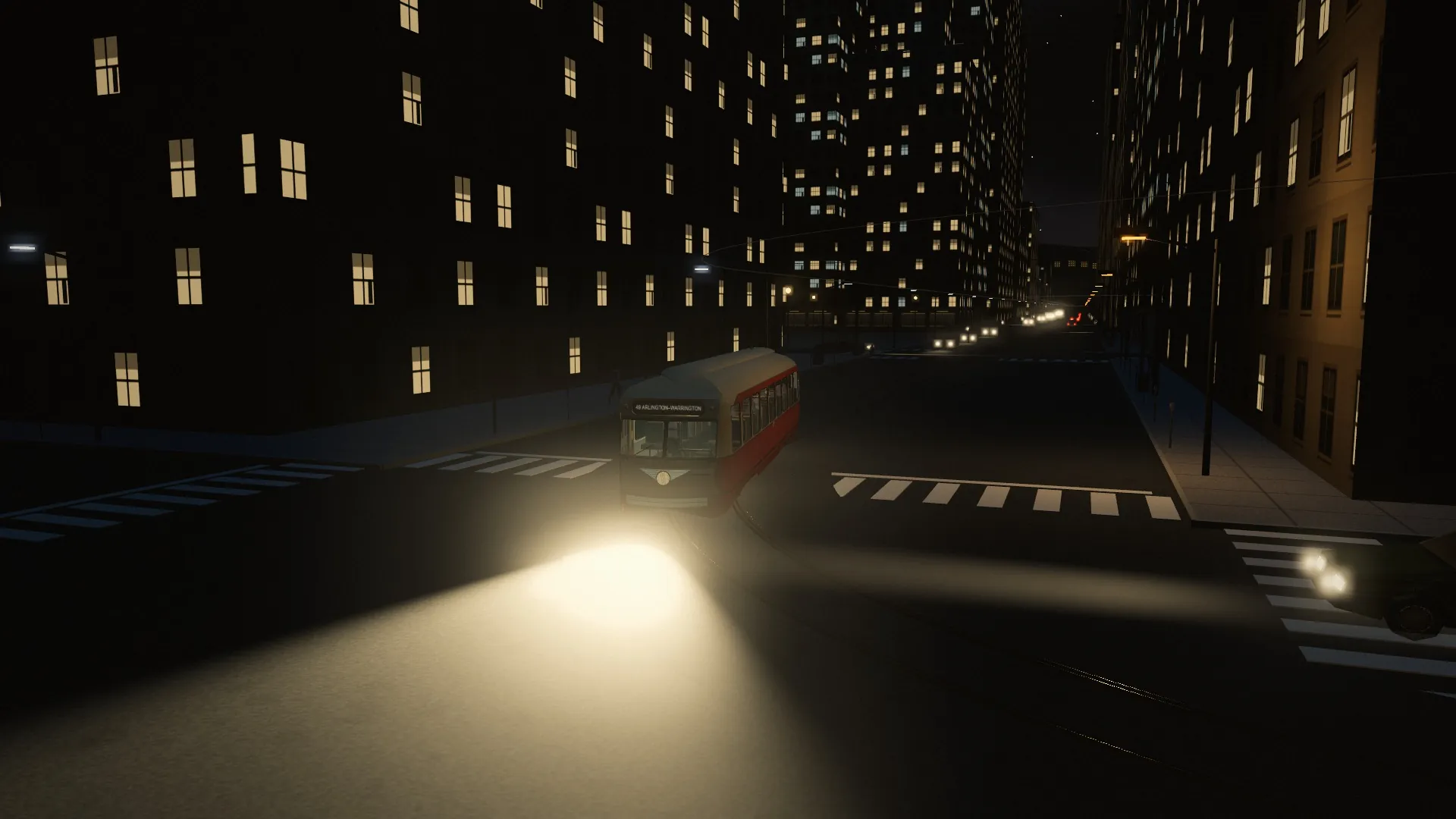
A PCC with its headlight on crossing a downtown street at night between office buildings with lit windows
Downtown at night, 1970s
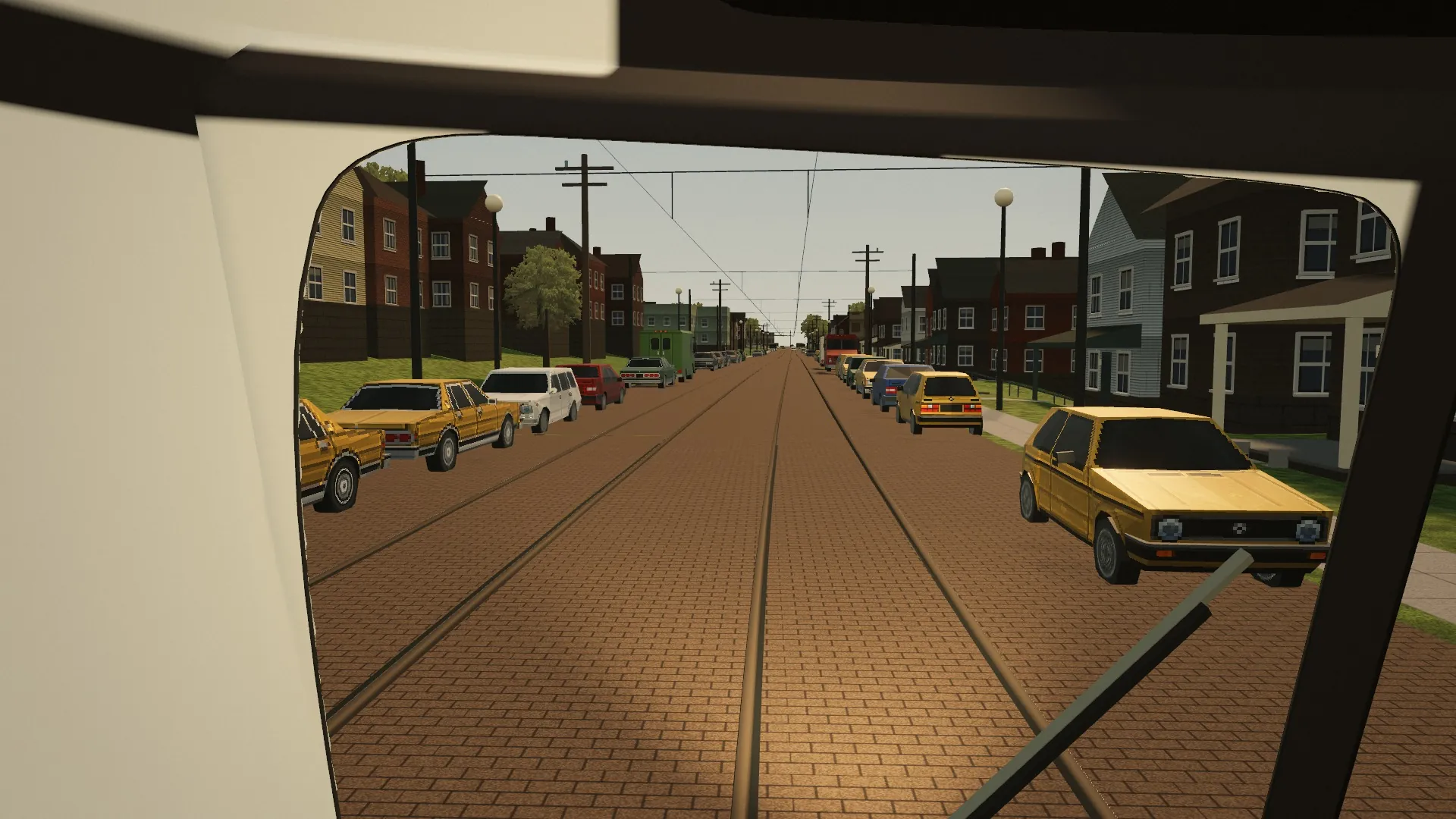
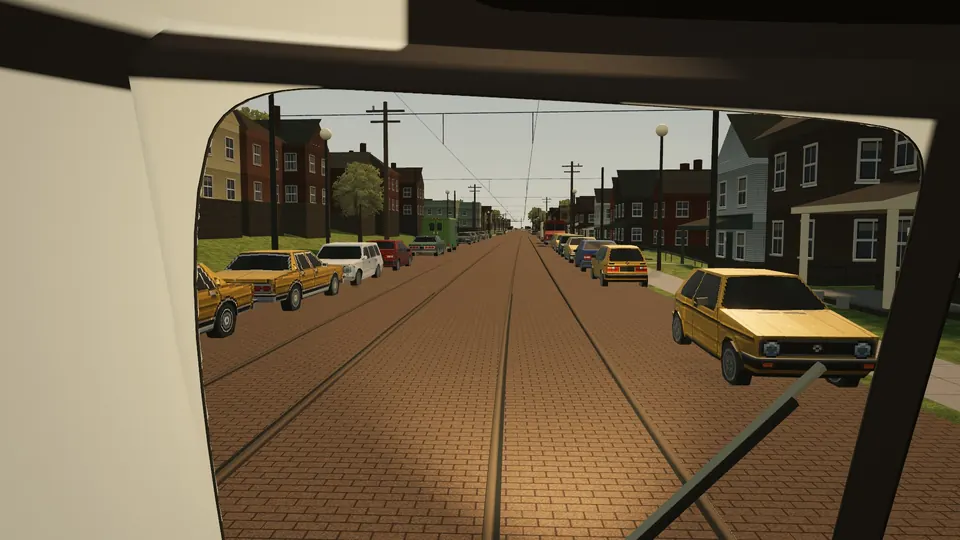
The view through a PCC's windscreen down Broadway, parked cars along both curbs
From the operator's seat on Broadway
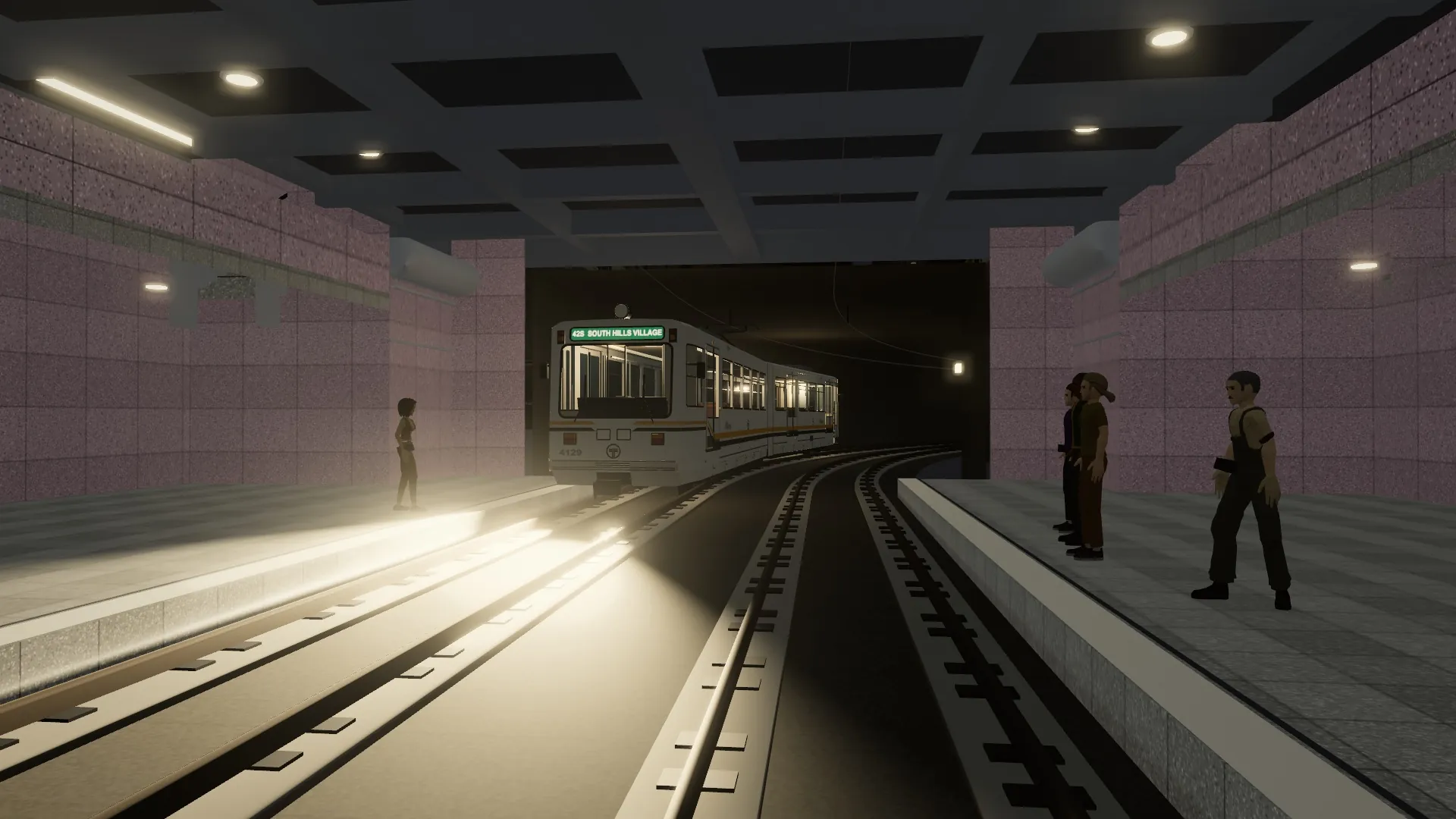
An SD-400 in the tunnel mouth at Wood Street station, riders on both platforms
Wood Street station, 1993
The black trusses of the Panhandle Bridge over the Monongahela with the downtown towers behind
The Panhandle Bridge, 1993
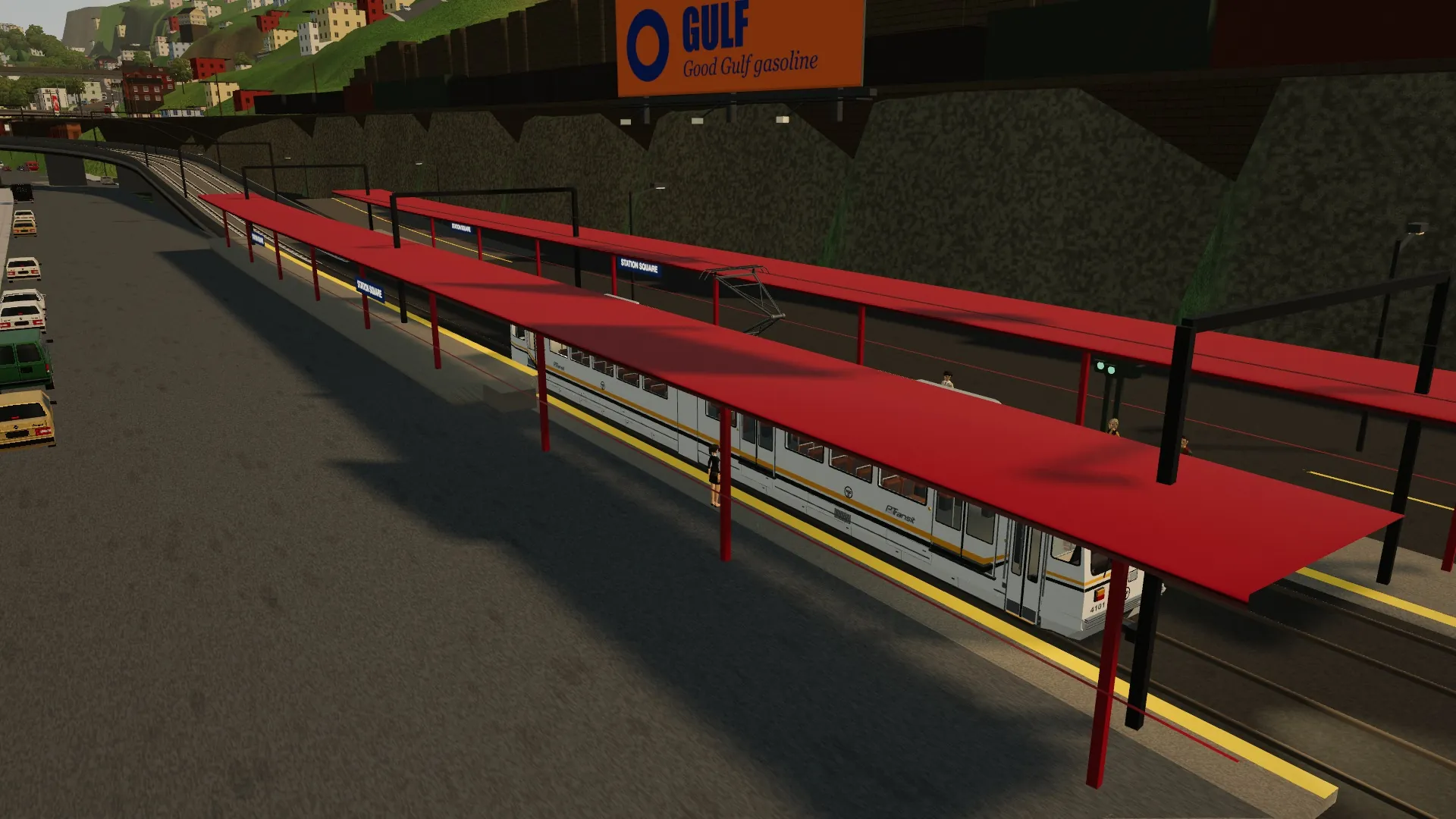
An SD-400 under the red canopies of Station Square with the Gulf sign on the hillside above
Station Square, 1993
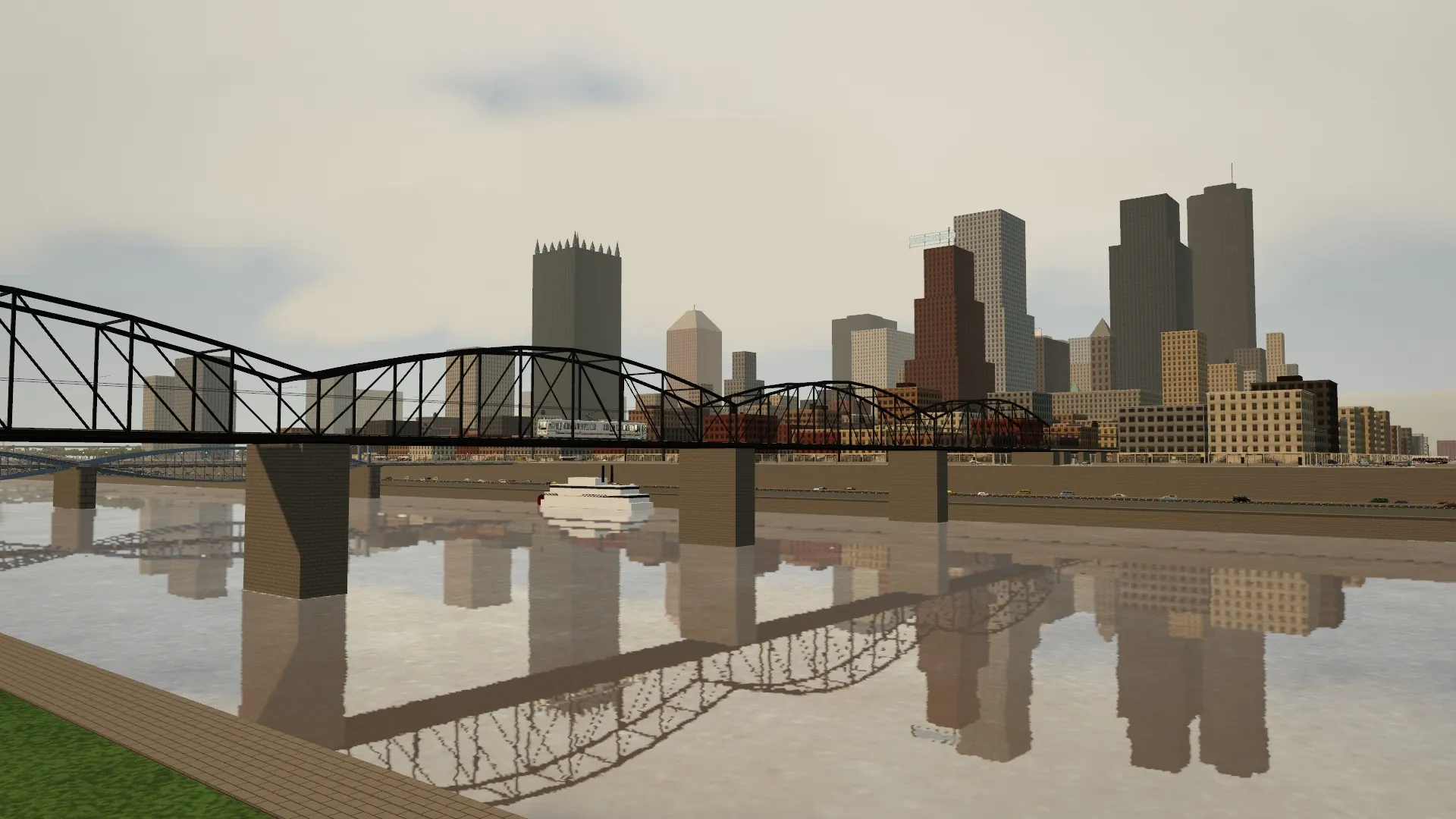
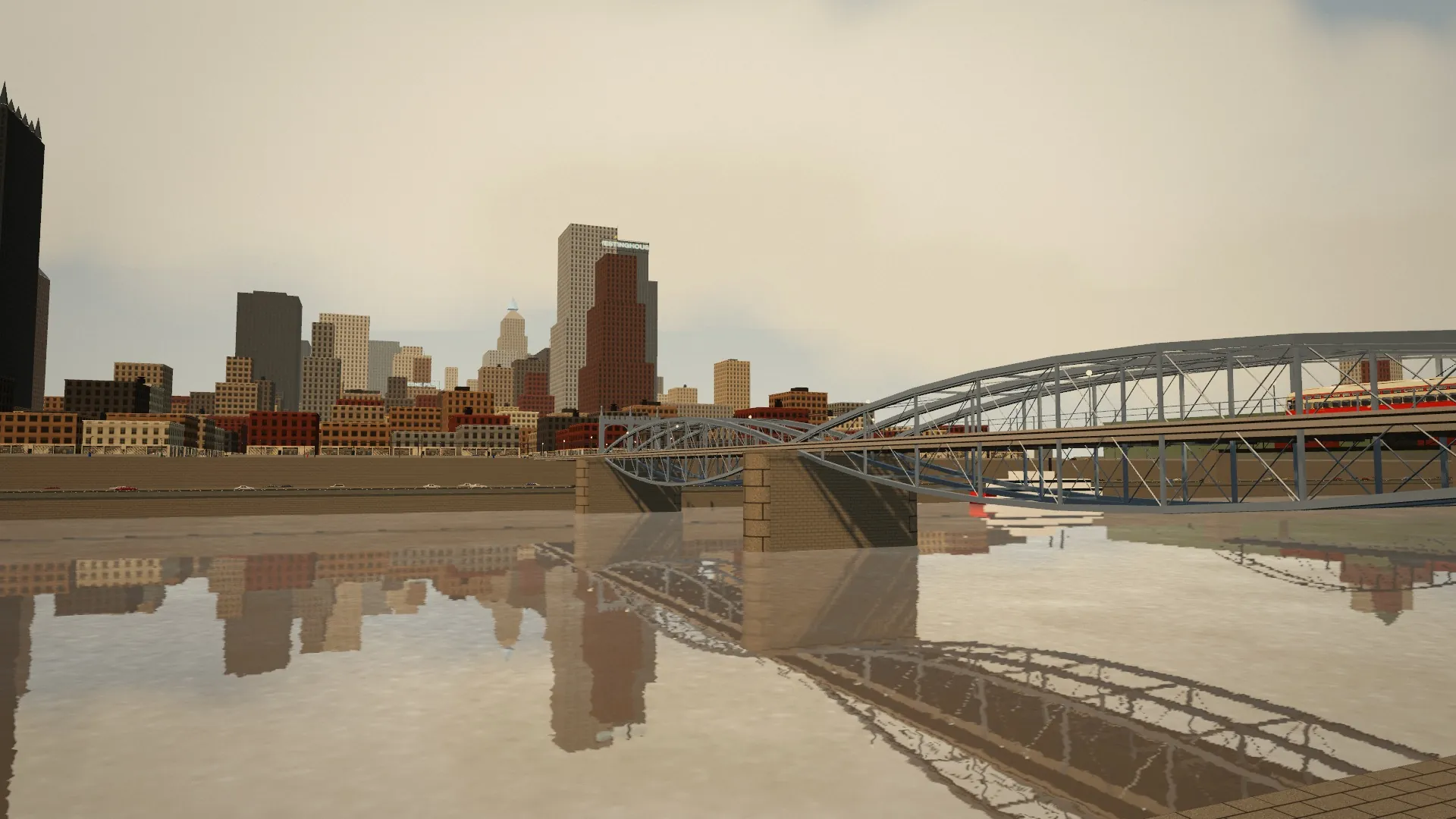
The Smithfield Street Bridge and the downtown skyline mirrored in the Monongahela
The Smithfield Street Bridge, 1970s

The cars and their colors

Every car here can be driven. The liveries are drawn from period photographs, from Pittsburgh Railways' cream and red to the specials PAT ran in the seventies.

The 1970s

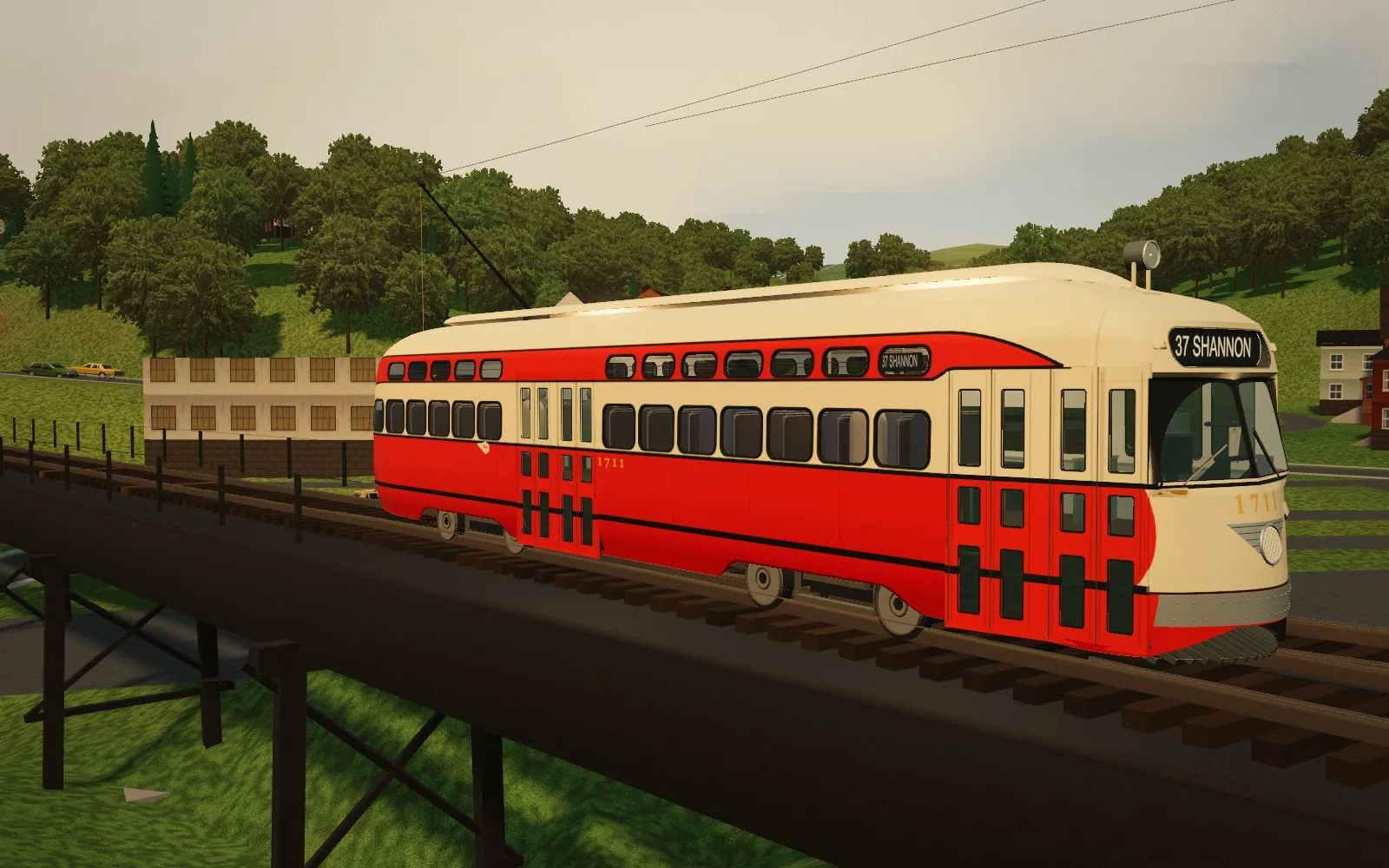
PCC 1711 in Pittsburgh Railways cream and red
1711 Pittsburgh Railways cream and red The 1700s as delivered
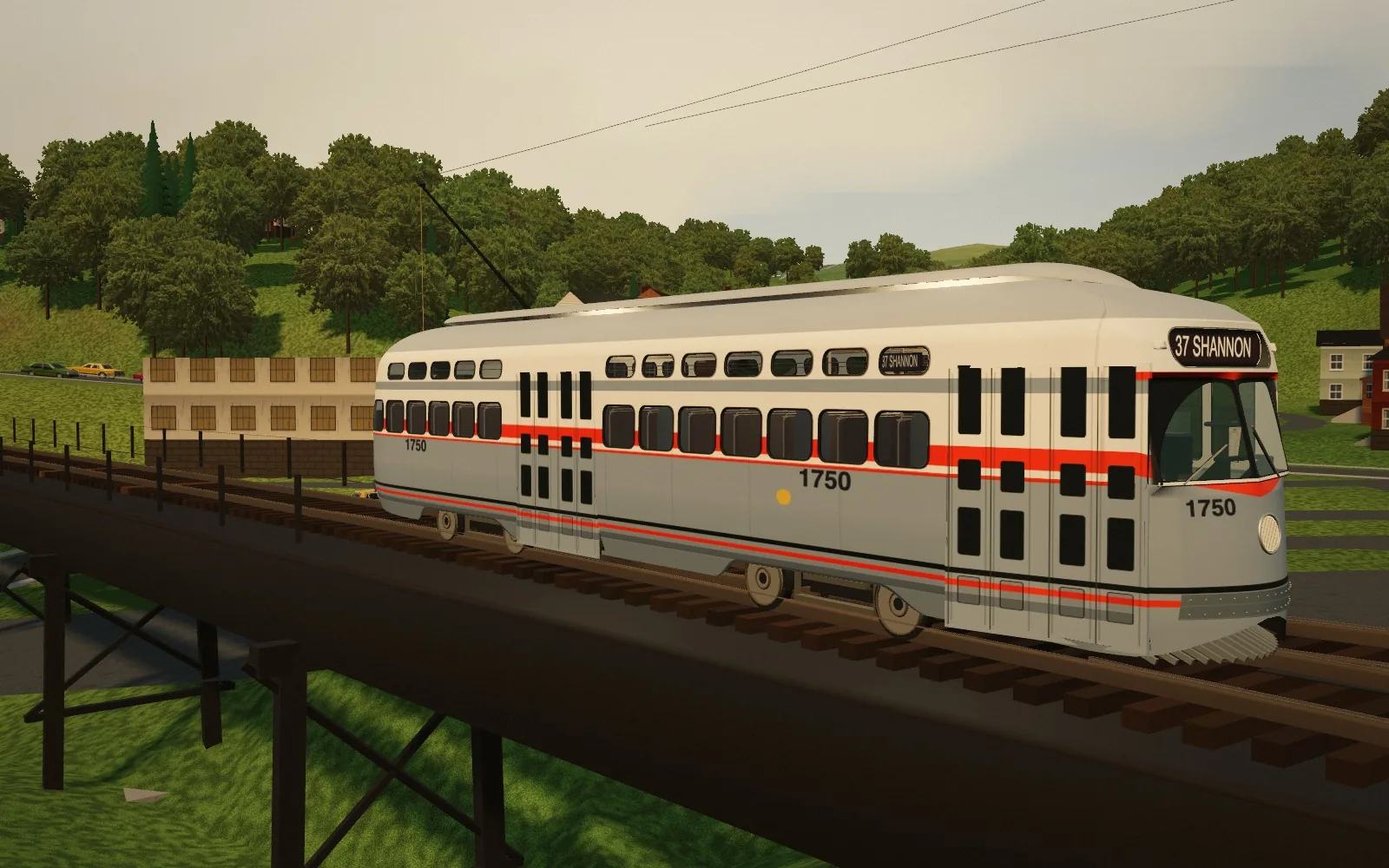
PCC 1750 in PAT grey, cream and red
1750 PAT grey, cream and red Port Authority's first scheme
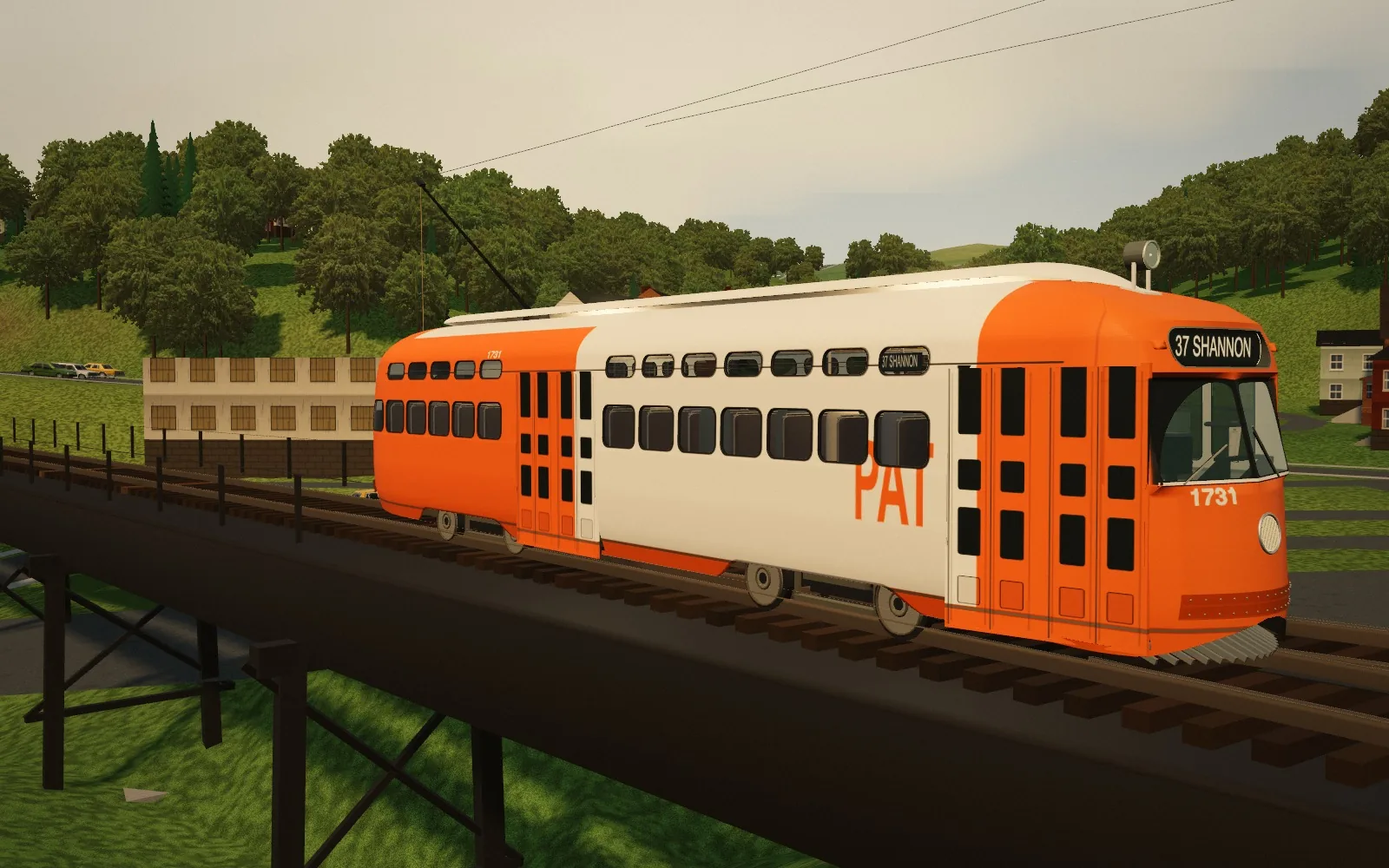
PCC 1731 in PAT orange and white
1731 PAT orange and white All-electric
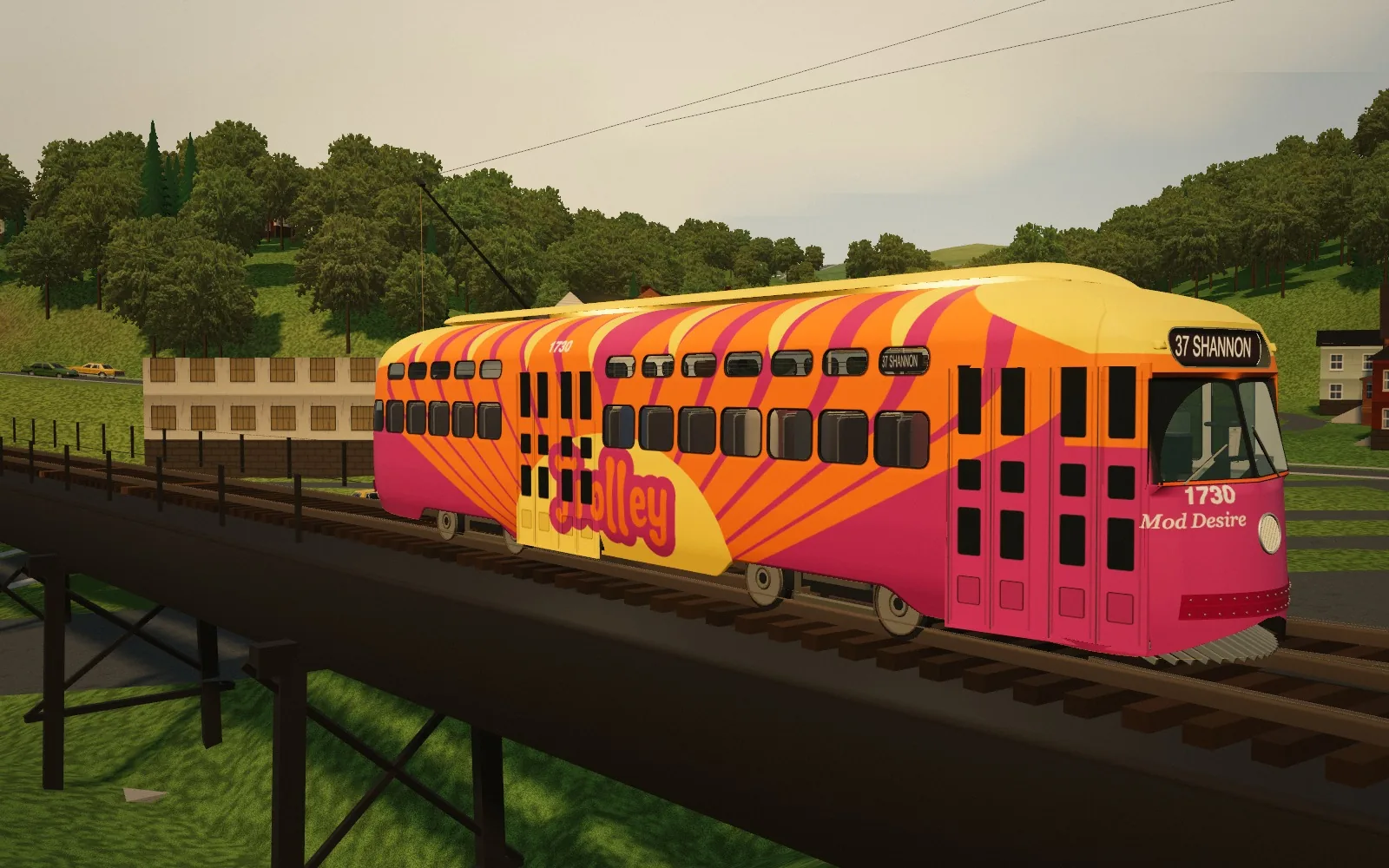
PCC 1730, the Mod Desire, painted in pink, orange and yellow swirls
1730 Mod Desire A seventies special
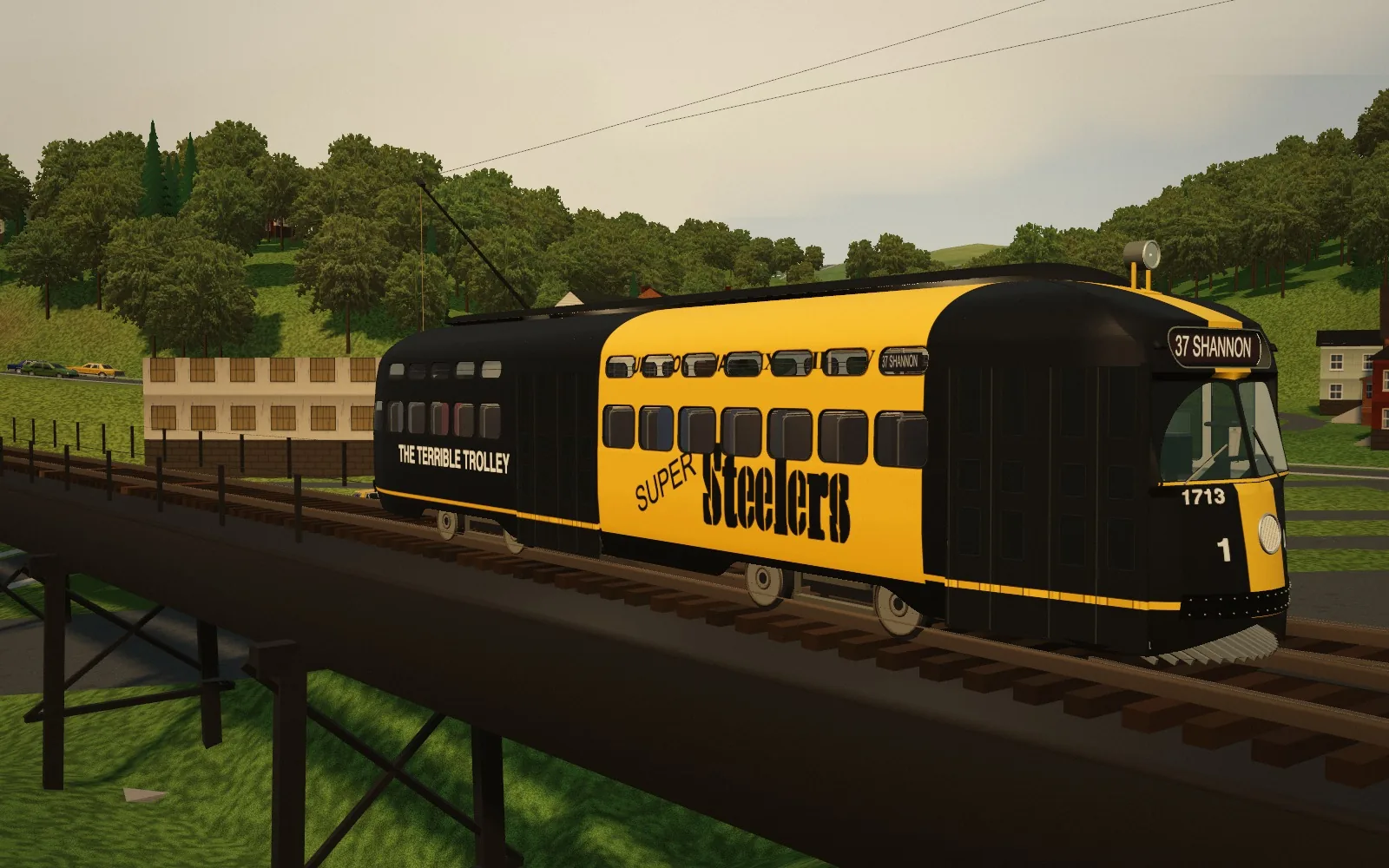
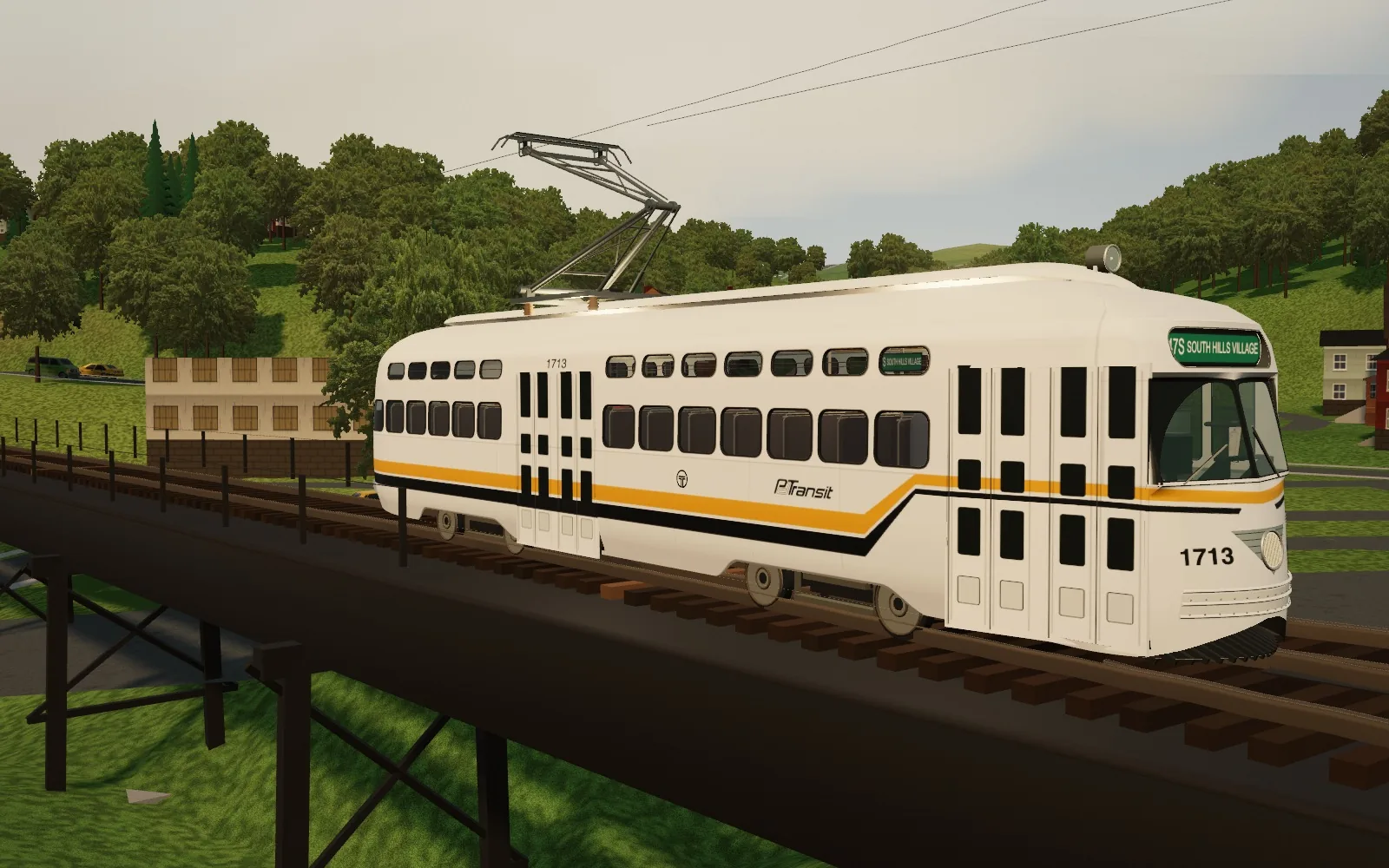
PCC 1713, the Terrible Trolley, in Steelers black and gold
1713 The Terrible Trolley Black and gold for the Steelers
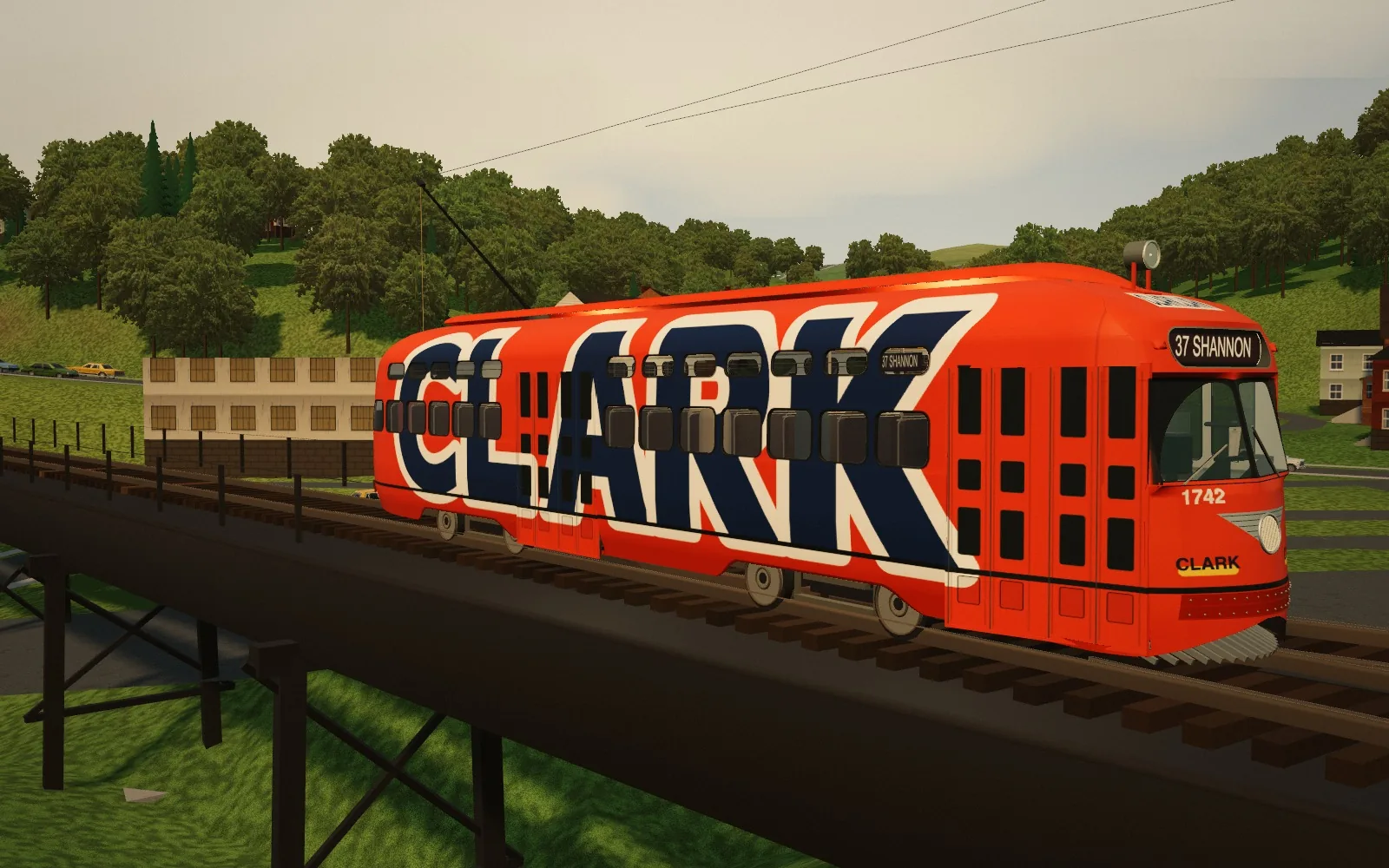
PCC 1742 painted orange with CLARK in large blue letters
1742 Clark Bar The candy bar made on the North Side
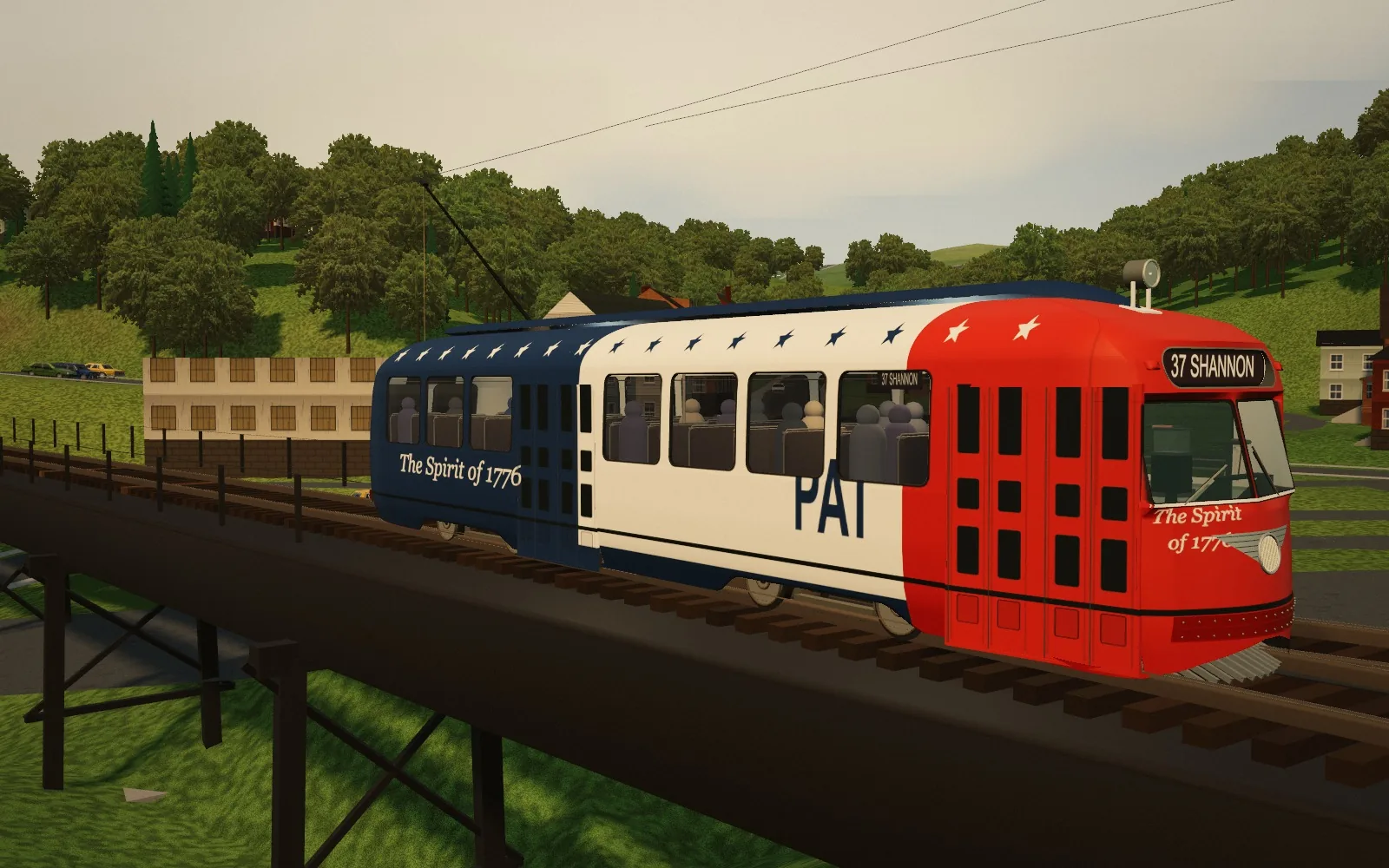
Air-electric PCC 1776 in red, white and blue for the Bicentennial
1776 The Spirit of 1776 Bicentennial, air-electric
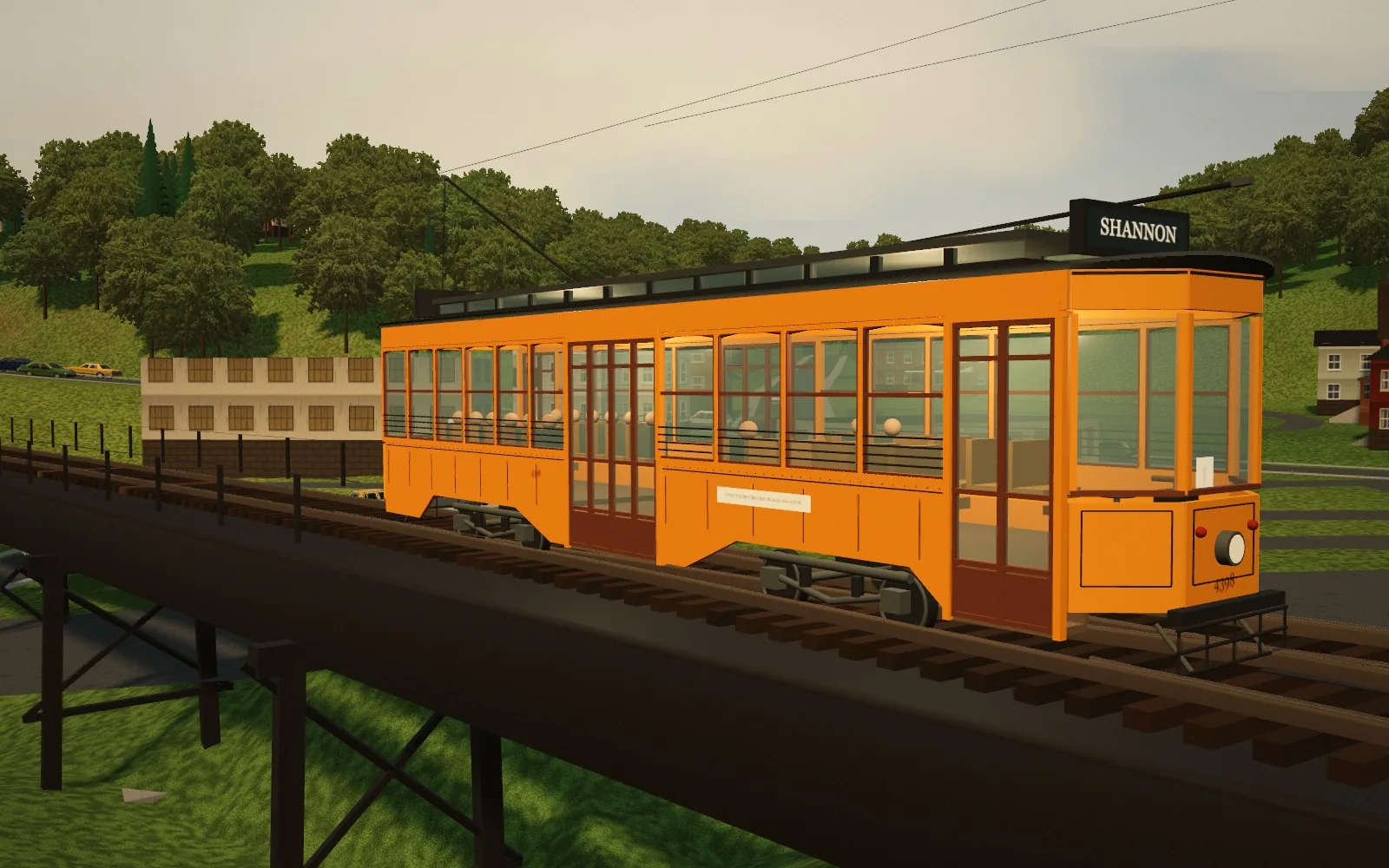
The orange Jones car, number 4398, an older wooden-style streetcar
4398 The orange Jones car A heritage extra

The MOD era, all-electric cars

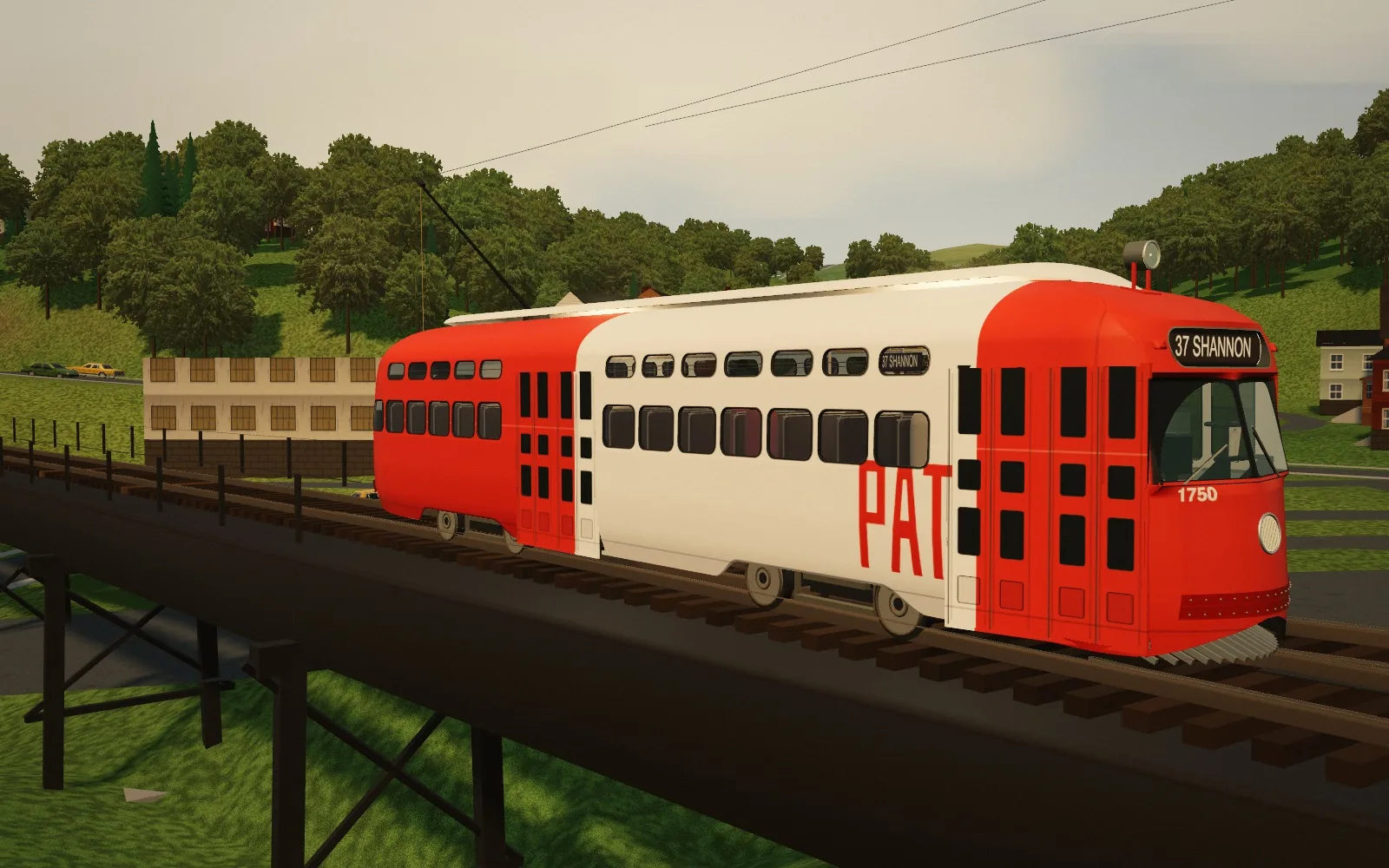
PCC 1750 in PAT red and white with tall PAT letters
1750 PAT red and white
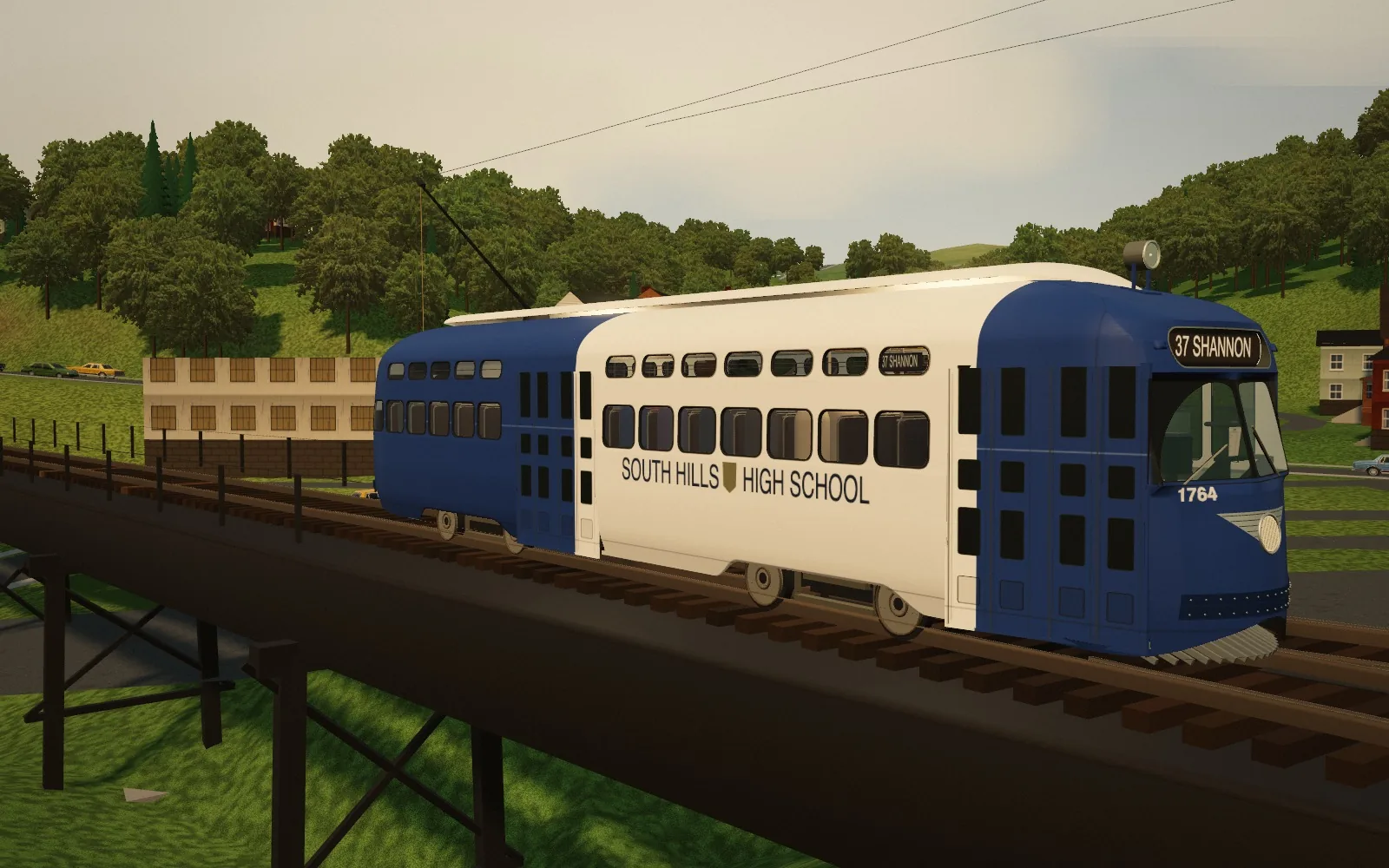
PCC 1764 in dark blue and white for South Hills High School
1764 South Hills High School
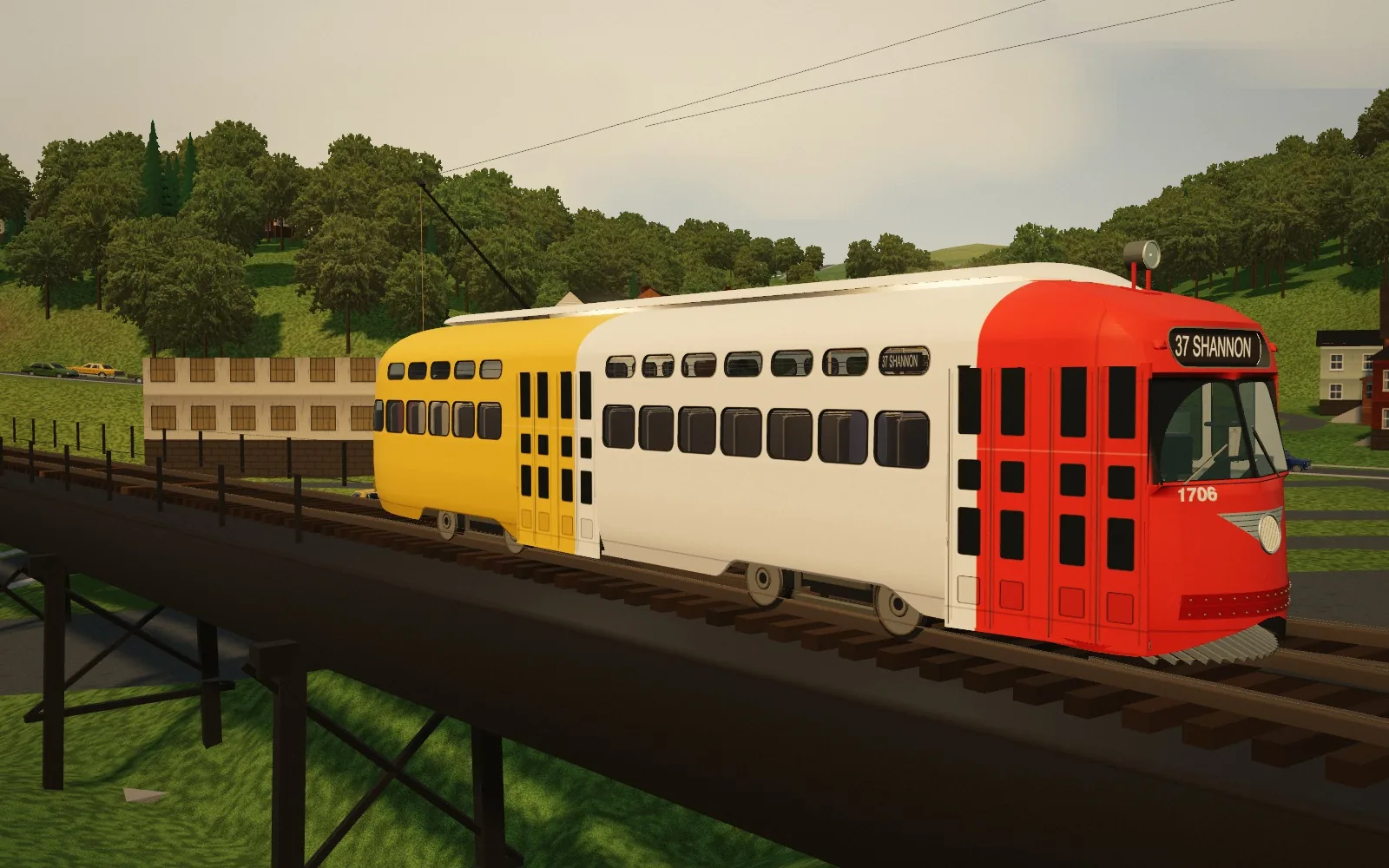
PCC 1706 with a red front, white middle and yellow rear
1706 PAT red, white and yellow

1993

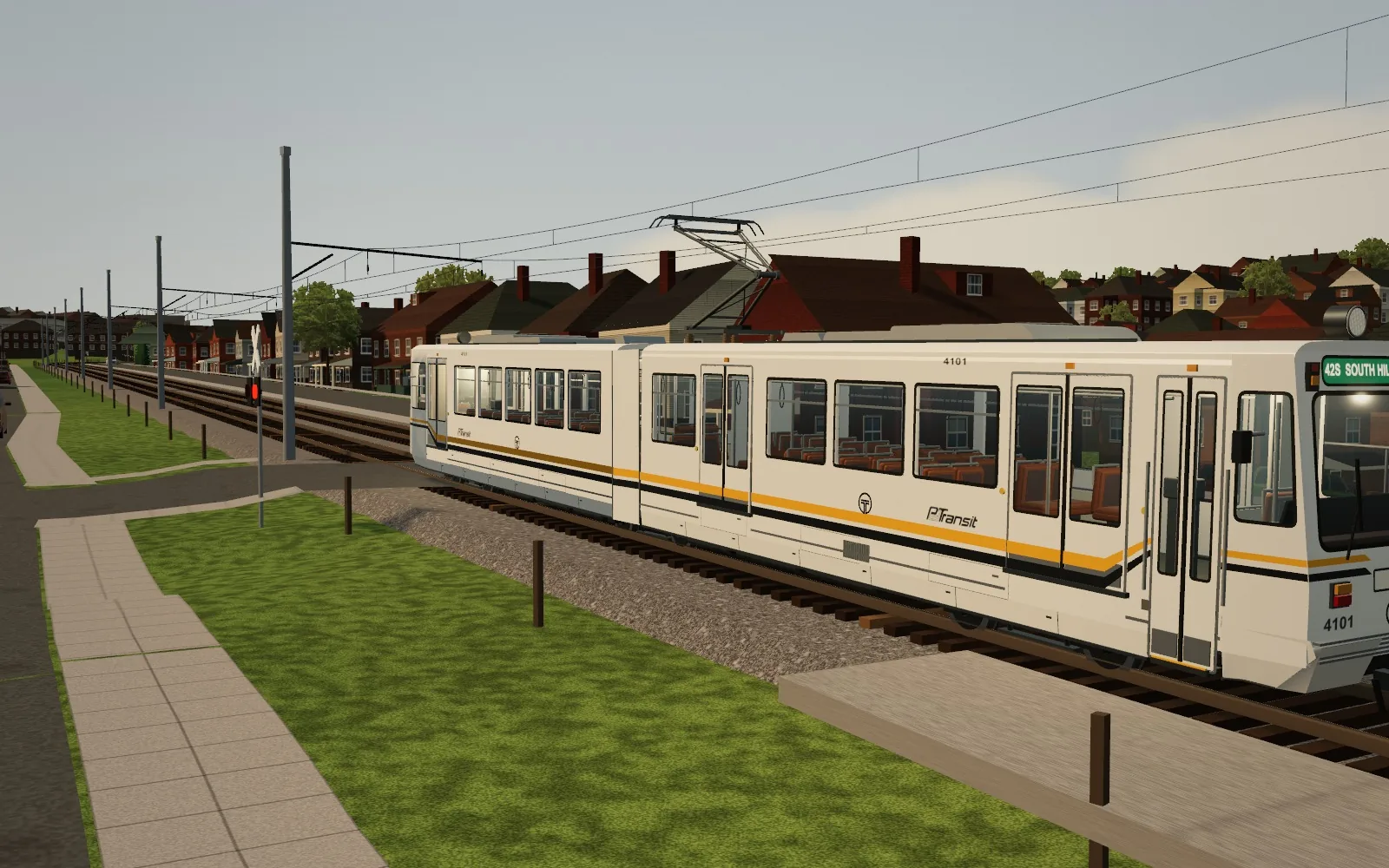
Siemens-Duewag SD-400 light rail car 4101 in white with the PATransit stripes, on the Beechview line
4101 Siemens-Duewag SD-400 The light rail car of 1985
Rebuilt PCC 4001 in PATransit white with a pantograph
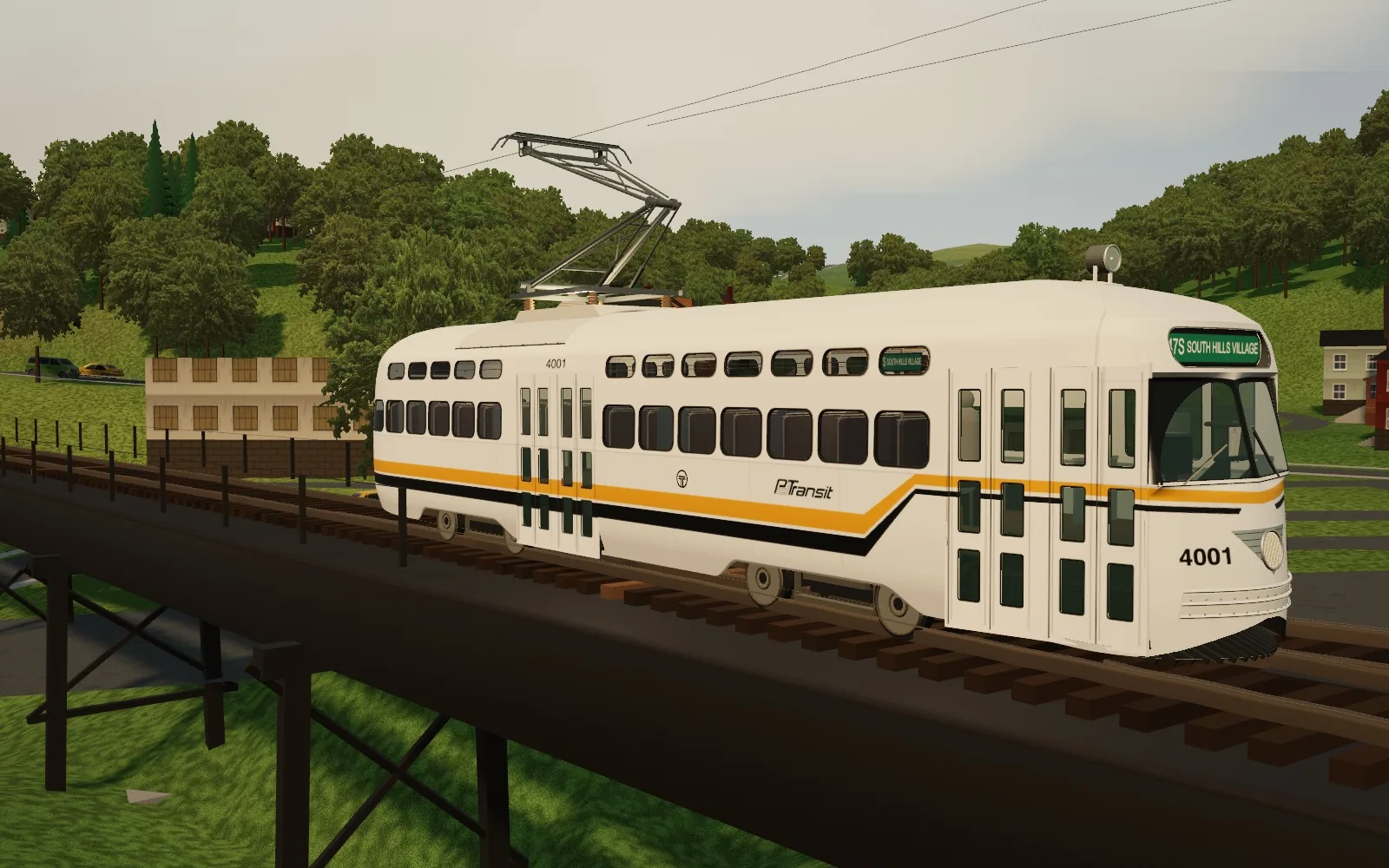
4001 Rebuilt 4000-series PATransit white, under a pantograph
PCC 1713 in white, one of the Super 17 cars
1713 Super 17 The old Terrible Trolley in white

What goes into it

The controls of the car

A PCC was driven with the feet: a power pedal, a brake pedal, and nothing moves unless one of them is down. The game gives you the controller's four power and four brake notches, the gong, sand for a wet hill, the doors, and an emergency stop that drops the track brakes.

At a junction in the seventies the overhead contactor sets the switch: coast under it to go straight, take power under it for the curve. In 1993 the LRV carries a route selector and the points set themselves for the route it is programmed for.

Lines where they ran

Track, stops, grades and speed limits follow the real alignments, checked against aerial photographs of 1982 and 1993, period timetables and route tables. The streets, rivers and hills come from OpenStreetMap and survey elevation data, and the landmarks are modeled from photographs: the tunnel portals, the bridges, the P&LE station, Kaufmann's clock, the skyline of the day.

Sound

Every sound is made as you drive rather than played from a recording: the traction motors' gear whine rising with the notches, the rail joints and frogs under each truck, flange squeal on the curves, the tunnel's echo, crossing bells, and the SD-400's compressor and air.

People and traffic

Riders wait at the stops, wave the car down, board and pay the Pittsburgh way: at the front door going into town, on the way out going home. Automobiles and PAT buses share the streets, traffic lights hold the corners, and the other cars on the line keep their distance and meet you at the passing sidings.

Weather and seasons

Day, dusk and night, with the windows lighting up and the headlight mattering. Rain makes the rail slippery and brings out the wipers; snow lies on the ground and the roofs. There are summer fairs, Christmas on Smithfield Street and a parade day downtown.

A career

Seniority begins in June 1978 at the bottom of the list. Training with an instructor, the extra board, turn-in reports on pink copy, a record card with points against it, overtime calls, letters from riders and, in 1985, school for the new light rail cars.
How to play

Open the game (it is in beta: give the beta password, or email adam@adamsullivanconsulting.com to get on the list), choose Career or Free run on the blind, pick an era, a run and a car, and take the controls. A desktop browser with a recent graphics card gives the best picture; tablets start on a lighter setting.

Operating instructions

Keyboard

  • W S notch up to power, down to brake
  • D doors
  • B gong
  • X sand, hold
  • Q track switch, hold
  • Space emergency stop
  • 1 to 4 cab, chase, trackside, orbit
  • Drag the mouse to look around

Game controller

  • RT LT notch up and down
  • A doors
  • B gong
  • X sand
  • Y emergency stop
  • LB track switch
  • Right stick to look, Start to pause
  • The menus work from the pad too

Touch

  • A Brake pedal under the left thumb and a Power pedal under the right
  • Slide up a pedal for more; let go of both to coast
  • Gong, doors, sand and the track switch beside the pedals
  • Drag the view to look around

VR headset

  • Open the game in the Meta Quest browser and press Enter VR
  • Right stick: notch up and down
  • Trigger gong, grip sand, A doors, B emergency
  • Left grip track switch, Y recenter

Press P to pause for settings and the full list of controls. Your career and settings are kept in the browser you play in.

The view from a PCC's operator's seat through the windscreen

For museums and historical societies

The same simulator can be your town, on your streetcar line, in the year you choose. New towns come together quickly from open map data, and visitors drive them from an exhibit cab with real pedals and buttons across three screens.

Read how